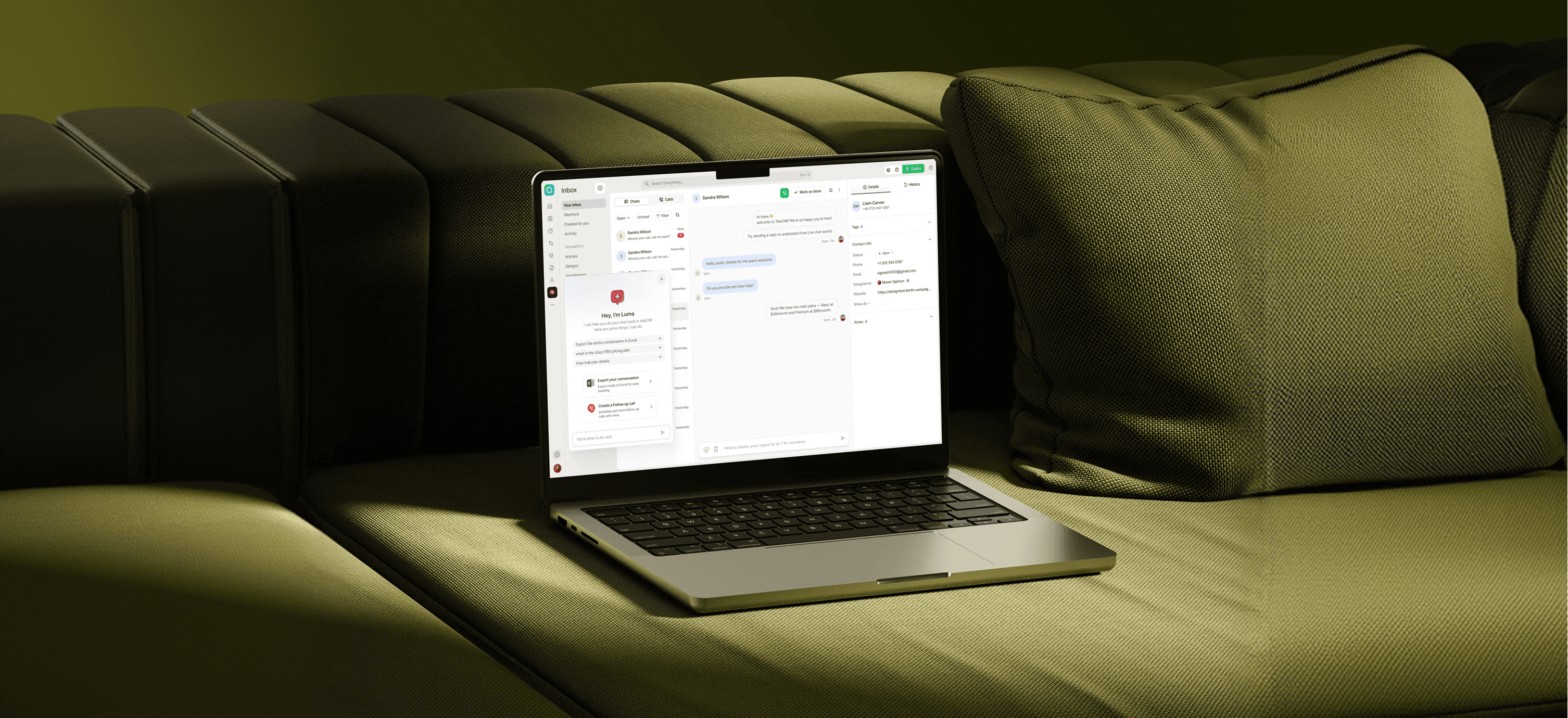
Designing an AI Support Experience That Feels Human
Design Timeline
6 Month
Collabration
Project manager, developer
My role
For owning the whole project from scratch on design front, DQA, feature enhancement & collaborating with multiple teams
Overview
TeleCMI is a cloud telephony and contact center platform that helps businesses manage customer communication through calls, IVR, chat, and support operations in one unified system.
This case study details how I helped design AI-powered workflows that helps Sales Managers and Sales Reps in their daily tasks and operations.
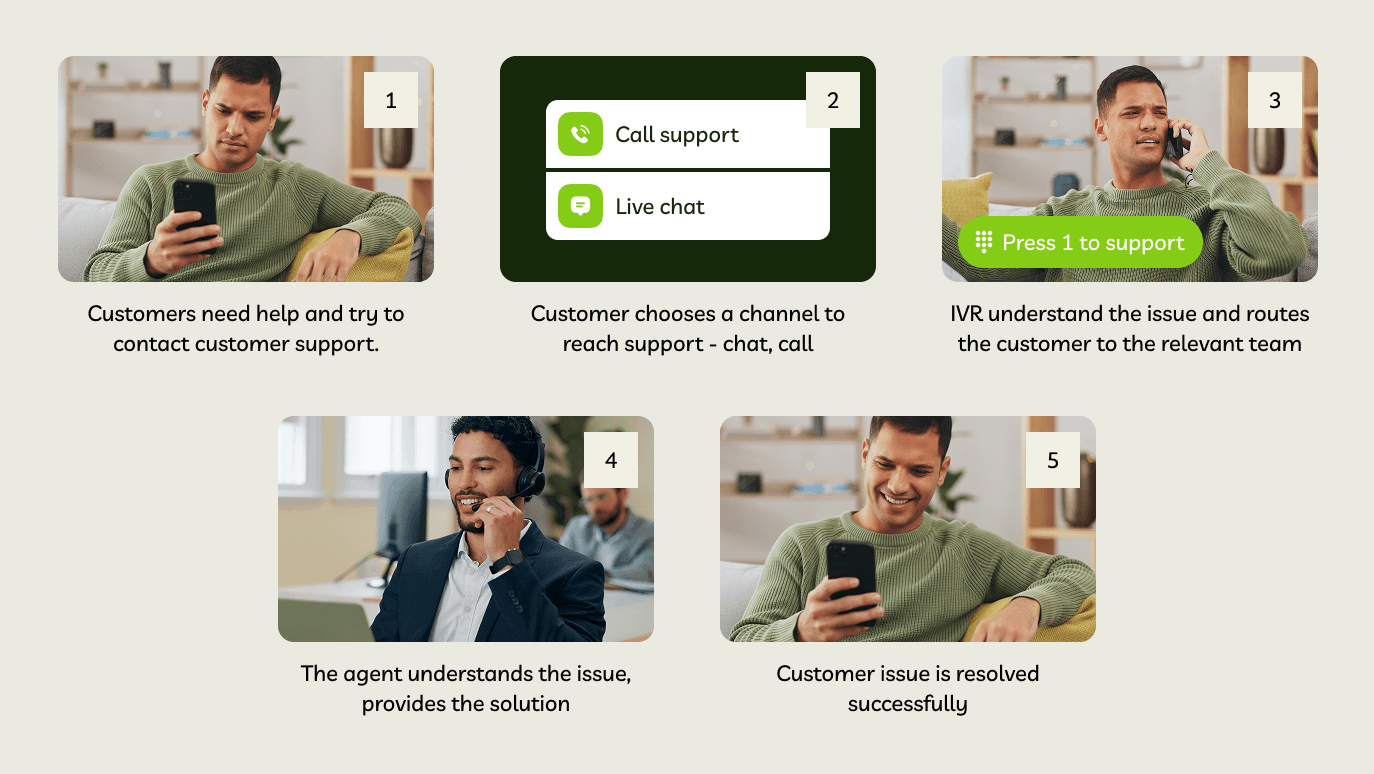
How it works
Understanding the Problem
Research showed that many cloud phone support workflows still relied on manual operations like IVR setup, call routing, and after-hours handling. This created delays and inconsistent customer experiences.
🕒
Customer conversations were scattered across calls, chats, and support channels, making it difficult for teams to maintain context and deliver seamless support.
⬇️
Existing cloud telephony systems handled communication but lacked intelligent automation and actionable insights.
📞
Support managers had limited visibility into customer issues and agent performance, leading to delayed resolutions and inefficient workflows.
Users & their needs
We focused on two primary user groups involved in customer communication and support operations: Sales Managers and Support / Sales Representatives.

Goals
Business Goal
The primary goal was to improve TeleCMI’s support operations using AI-powered voice, chat, workflows, and knowledge base systems to reduce manual tasks, simplify routing, and improve response efficiency.
Design Goal
Design an AI-powered voice and chat experience that helps customers reach the right support faster, gives agents better conversation context, and reduces manual support operations through intuitive AI workflows.
What we learned form the other products
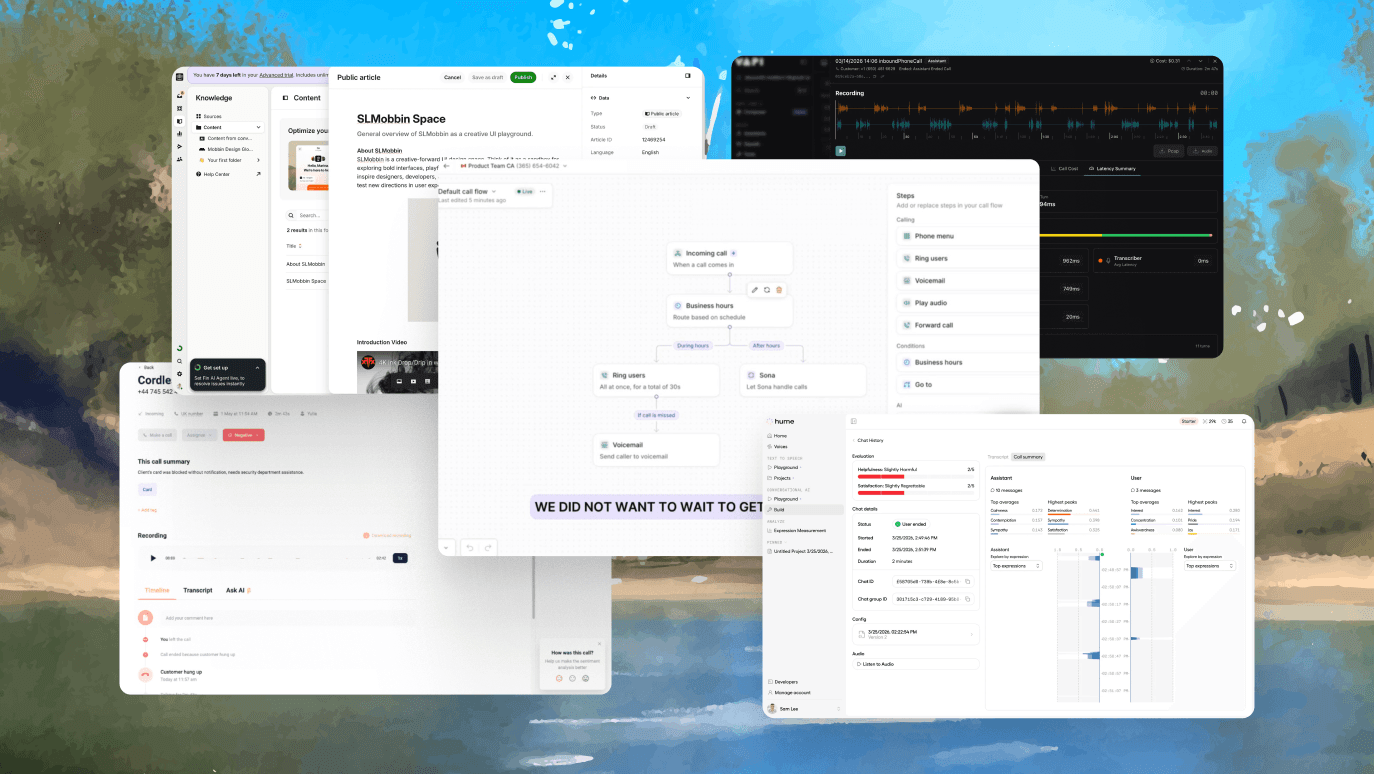
We compared cloud telephony and contact center experiences across 10+ communication and support platforms to analyze industry best practices.
📞
How leading platforms simplify customer communication and support workflows?
🔍
How do call routing, IVR flows, and AI-powered support experiences help customers reach the right assistance faster?
📊
How competitors improve support efficiency using AI agents, smart routing, sentiment analysis, and workflow automation?
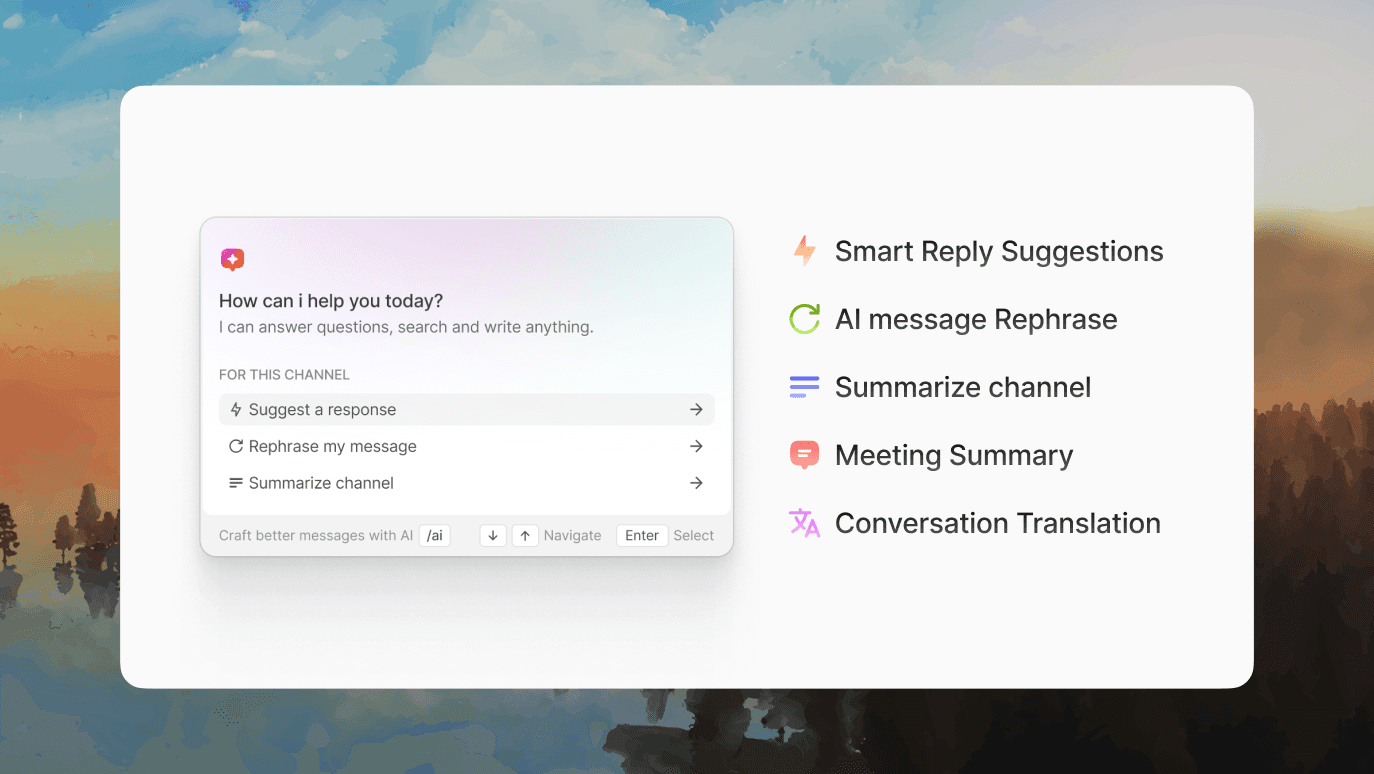
AI Copilot and AI Assistant
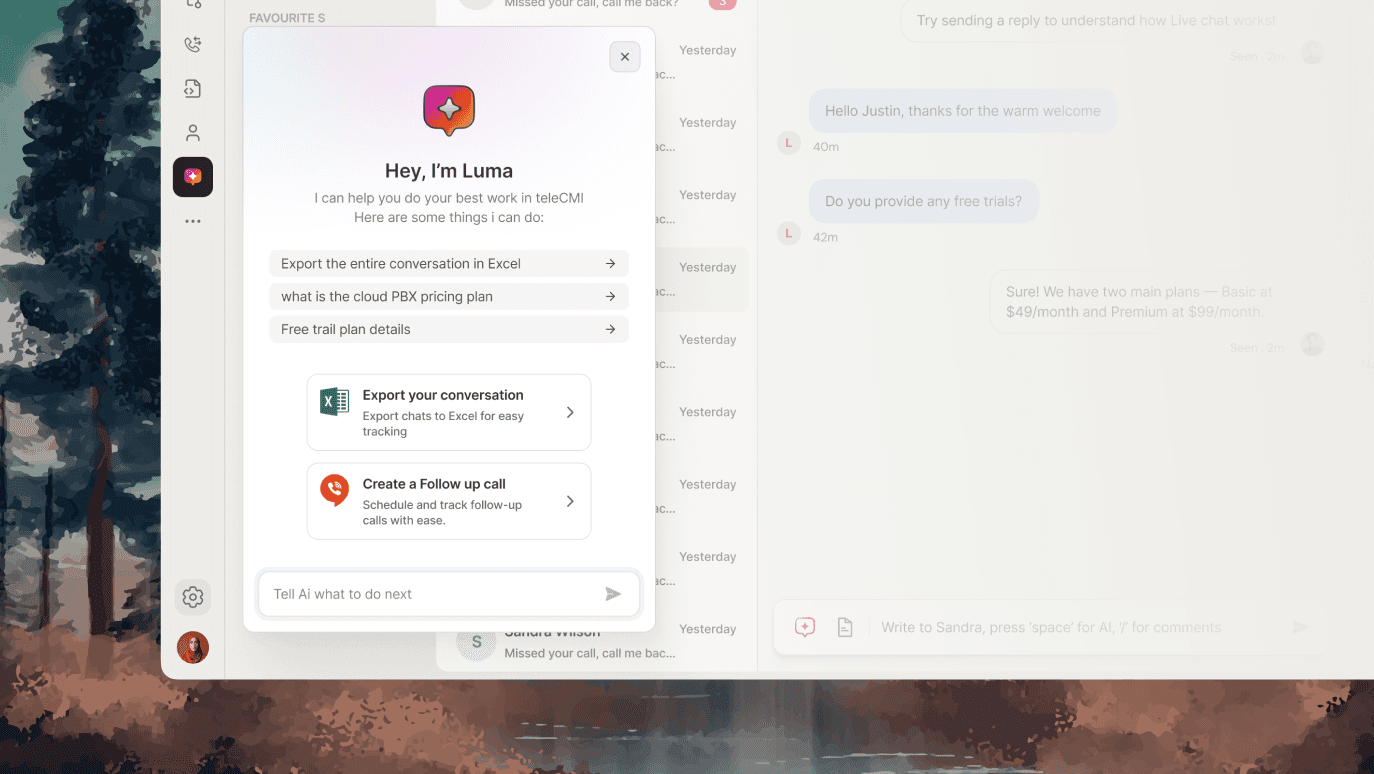
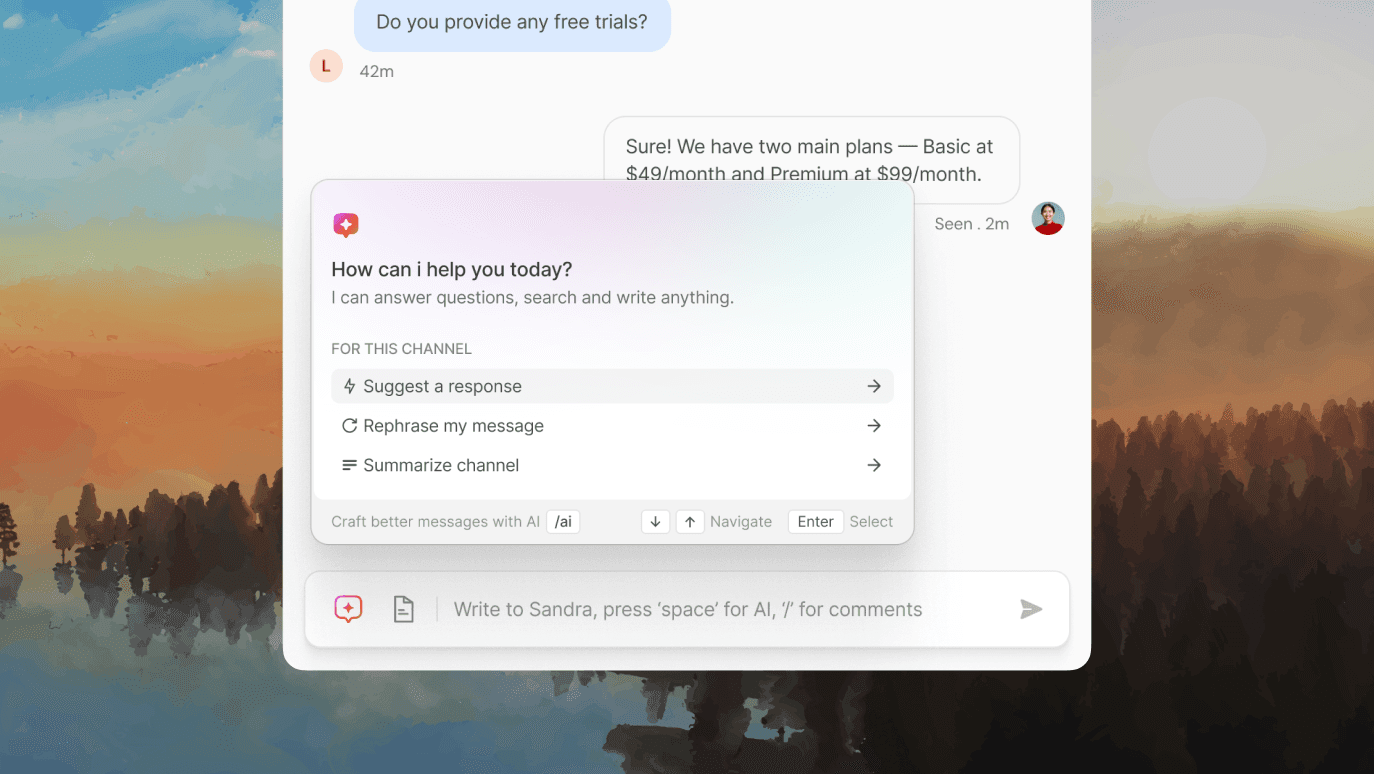
Managing customer context across calls and messages was difficult for agents, so we introduced an AI Copilot that summarizes previous conversations and helps agents quickly understand customer issues during handoffs.
AI Agent and Knowledge Base
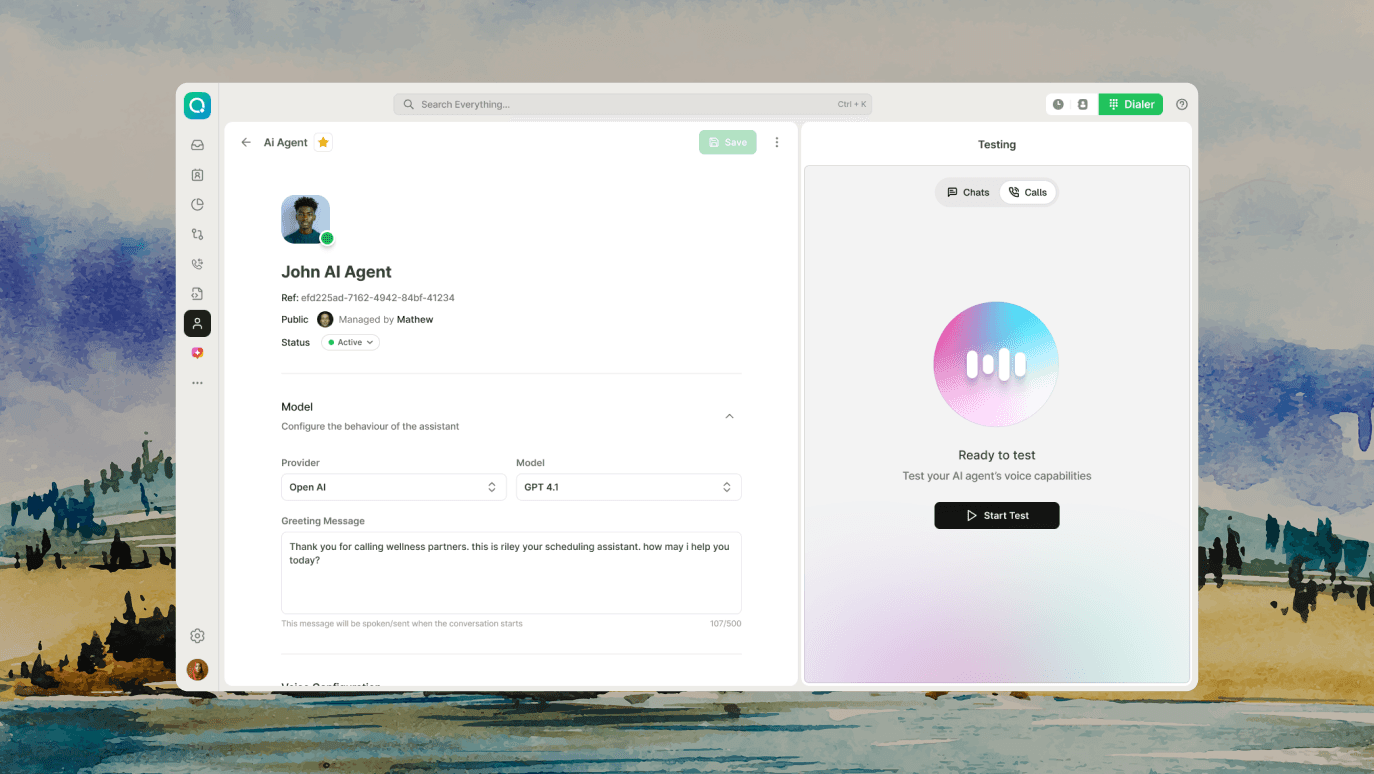
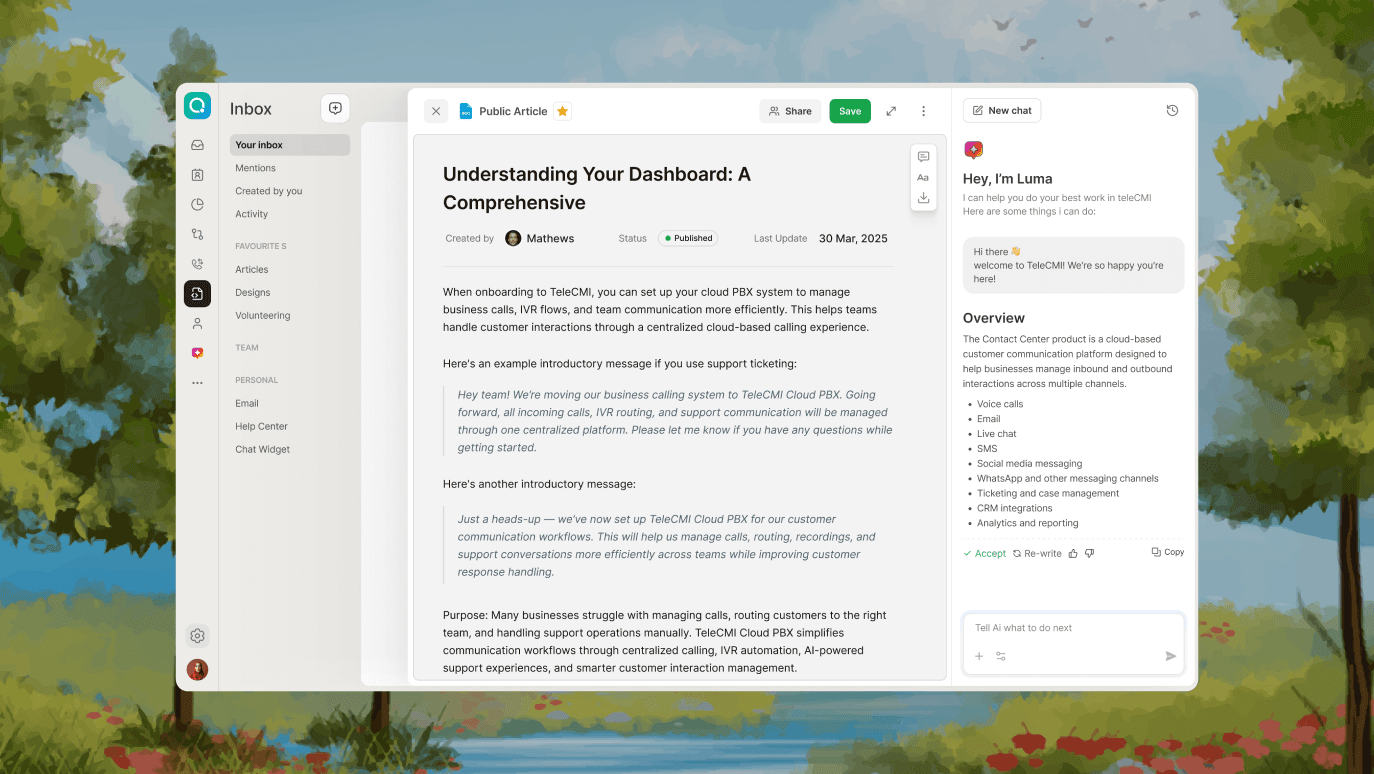
Customers often try to contact support after business hours when agents are unavailable, so we introduced AI Agents. Each AI agent is trained with product-specific knowledge managed through a centralized knowledge base. If the AI encounters a new or unknown query, it redirects the conversation to a human agent and learns from the interaction by updating the knowledge base for future support conversations.
Workflows and AI Call Score
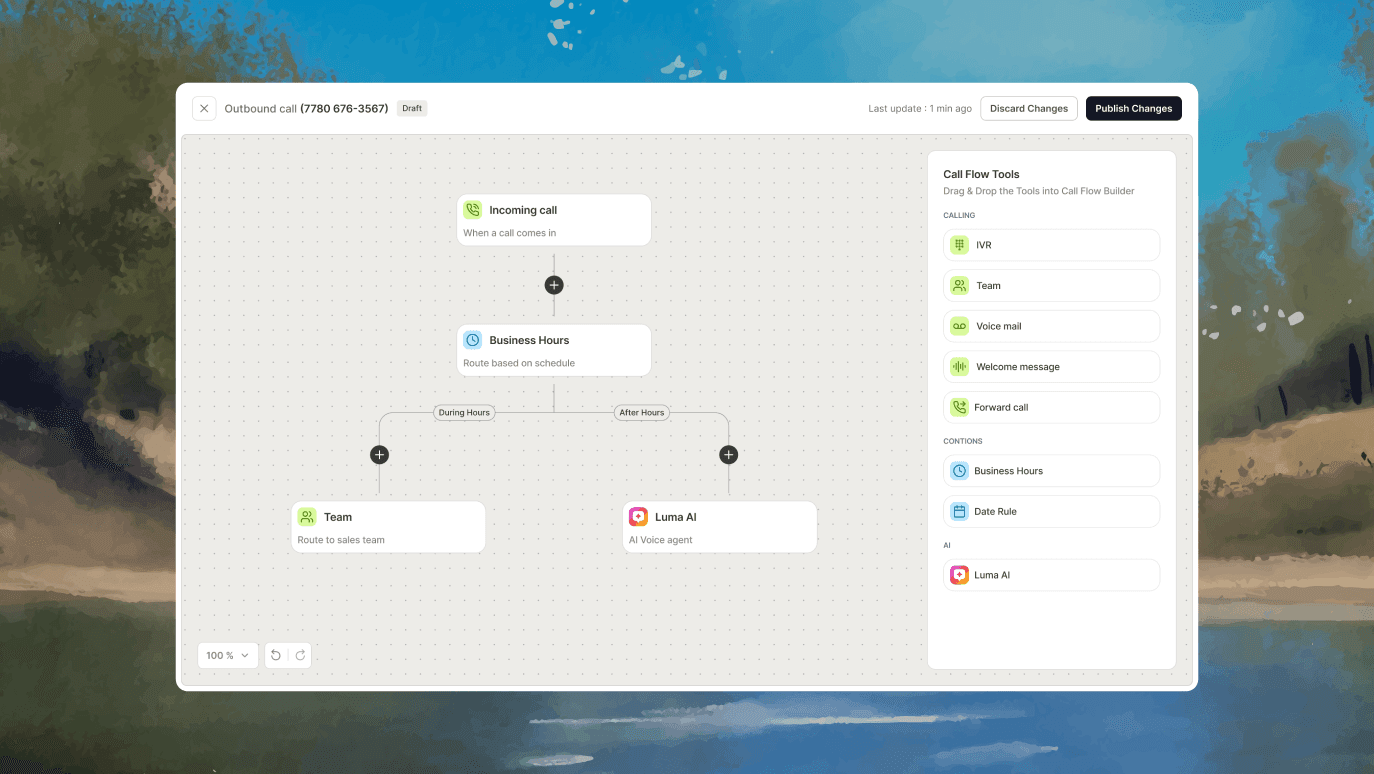
During peak hours and after business hours, customers often had to wait until an agent became available. To solve this, we introduced AI workflows with a configurable knowledge base that enables AI agents to handle customer calls automatically without manual effort.
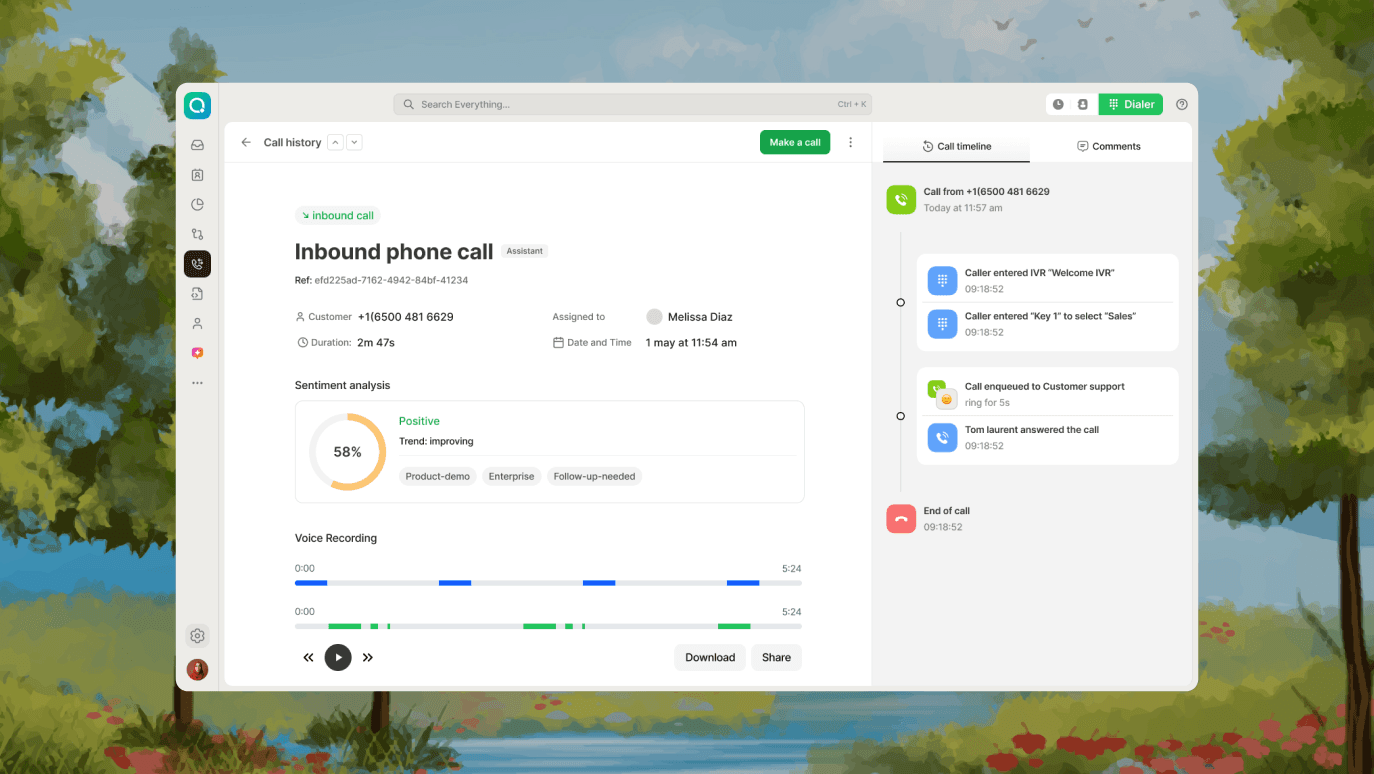
Managers had limited visibility into customer issues and agent performance, so we introduced AI sentiment analysis to track overall call quality based on conversation keywords and interactions. We also added AI-generated call summaries to help managers review conversations, guide junior agents, and ensure better customer support outcomes.
Impact
50%
After rolling out this feature, nearly 50% of customer queries were resolved automatically.
60%
More deeper insights for sales and marketing team
Takeaway from this project
🤝 Collaboration is the Key
During this project, I worked closely with Founder, Product Managers, Front-end Engineers, and Backend Engineers. Collaboration with both frontend and backend engineers is crucial for project success, ensuring that design concepts are
feasible and align with technical constraints.
️Importance of Documentation
It’s essential to document every design decision; this not only provides justification for your choices but also lays a crucial
foundation for future iterations and improvements.